From Traveling Village to Revillage: What we have learned
Mar 18, 2026
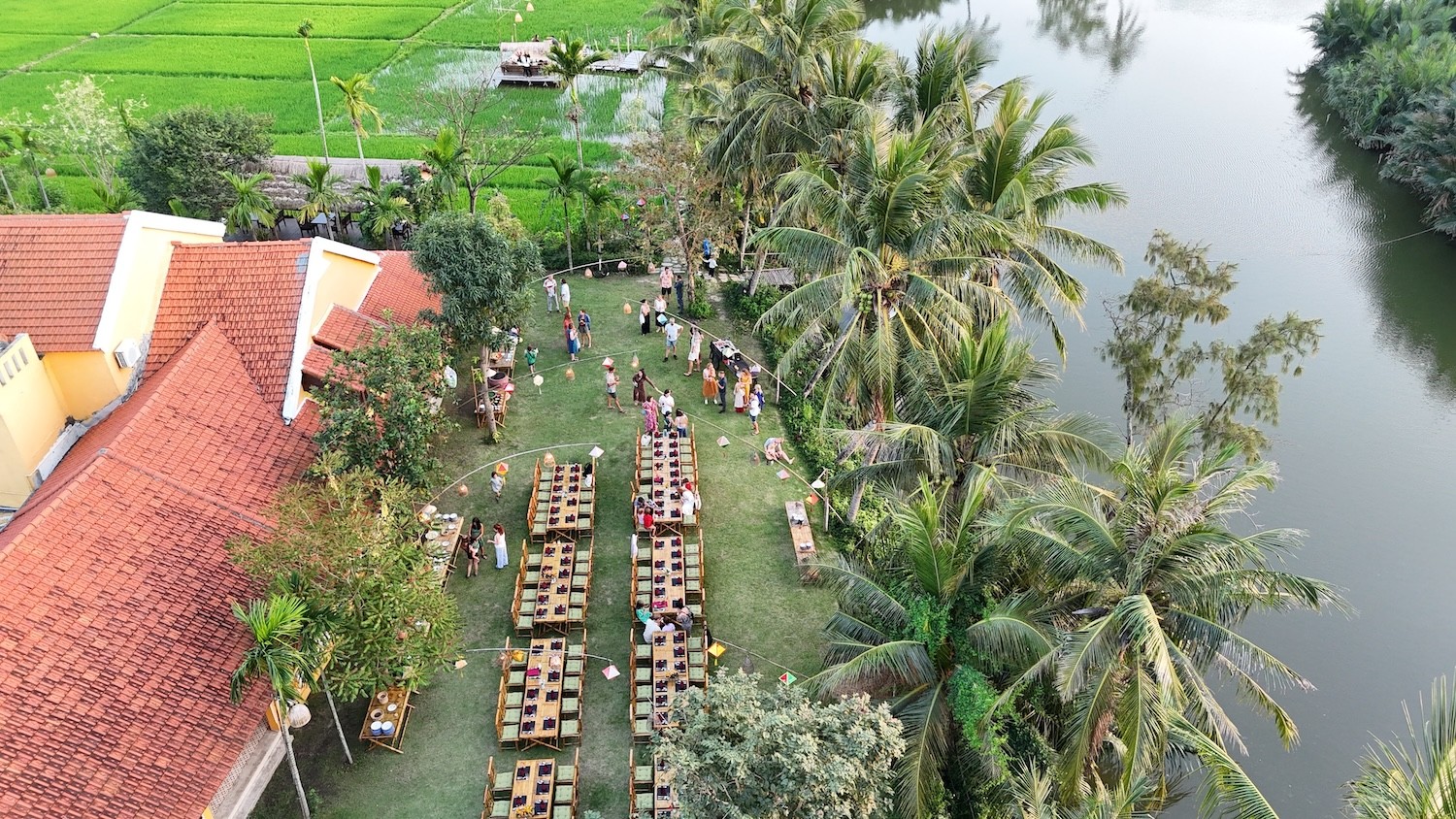
Over 3 years ago we launched Traveling Village, which was an experiment in living family life differently. The idea was simple: 20 families traveling together for 4 months.
As we had no idea how to actually do this, we made co-creating a big part of it from scratch. We were transparent about it being an experiment and not a perfect solution, and then we just went and did it. In 2024 we had an incredible trip to Vietnam, Thailand and Japan with 18 other families.
We are halfway through Traveling Village 3 and I wanted to reflect on some of the learnings, because the truth is that Traveling Village inspired us to create Revillage. Traveling Village is an amazing adventure and project in itself, but it’s also hopefully a stepping stone to something else; a permanent Revillage community.
Traveling Village is great for our work with Revillage, because it is these intense community trial runs, where you can experiment with community ideas with very low risk. When you design a permanent community, you feel like you have to nail the right model from the start. On Traveling Village we are going to three locations, and that movement is a shake-up of the whole community that allows for new things. At the same time, if something really doesn’t work out, it’s easy for people to opt out or just see the end of things. That’s a bit more difficult if you have invested in a house and live there.
But that learning is also fundamental for what we are trying to do with Revillage. Essentially we want to be part of the town or village that already exists. We don’t want to be a small bubble of privilege that develops something completely from scratch on a bare piece of land. While this model of course has its challenges, it makes us all way less dependent on each other. You can buy a house in the village, I can rent one. If the Revillage community doesn’t work, the town or village is still there, your real estate is still there. Your investment doesn’t collapse if Revillage collapses.
I’m super curious about the balance between commitment and freedom. You cannot get community without commitment, but a lot of us want our freedom. I think it’s something that stops a lot of people from being part of a community, because they feel they have to compromise too much on who they are to fit in or how they live.
On Traveling Village we have also learned so, so much about co-creation. I don’t really like that term, because I associate it with fluff. Companies use it without meaning.
I would say that during Traveling Village we have gone all in on co-creation, even inviting founding families in to shape the fundamentals. I can honestly say that doing co-creation has made Traveling Village better, people more connected and people have LIVED Traveling Village fully. I truly believe that having all families involved somehow in workgroups has made everyone’s experience better.
At the same time, co-creation has some downsides. We have seen people almost burn out because they took on too much. Sometimes it also becomes too much talking and coordination. After doing community projects for almost 10 years and being an avid researcher and student of the field of urban planning, cohousing, ecovillages, communities and architecture, I also personally have some professional knowledge and experience that I trust and want to follow. In a few cases I have had to put that aside for the sake of co-creation, and that has in a few cases led to worse outcomes.
I think the main learning here is that we need to find a better balance between pre-decided and co-created. Not that we need less co-creation, but we need a fundamental structure where some work is done for people. We need to create the canvas, but all the painting on the canvas, the community should do.
As I started out writing, Traveling Village is such an excellent project for Revillage, because we can very fast experiment with things. On Traveling Village 3, we are experimenting with having a community space 4 times a week, from 10–2. We are using a wide variation of spaces and observing how they work, how people act, who it works for and who it doesn’t. That is simply invaluable experience that I think will help shape Revillage and the spaces we will have there.
A small, but very important learning we have from Traveling Village is that it works so well to be fully transparent and open about the hard things. There are enough projects that look absolutely picture perfect. Personally I’m not so motivated to build a brand like that. I love being transparent, trying things out and also being open about things that didn’t work out. That has in return attracted the most amazing families we could ever have dreamed about. It seems like it’s this kind of filter and self-selecting mechanism to attract people who feel it’s a “hell yes”.
We are big travellers and have always been. We will probably never stop traveling, but after many, many years of traveling, the downsides are also clear. For our family we need the stability of one location and then every once in a while go on a big adventure. The huge missing link in traveling is also the disconnection with the local environment you are in. You can do some local immersion, but when you are traveling it’s almost always entirely consumption. We feel a deep need to actually create a real village and contribute to a location in a real and meaningful way.